Highlights
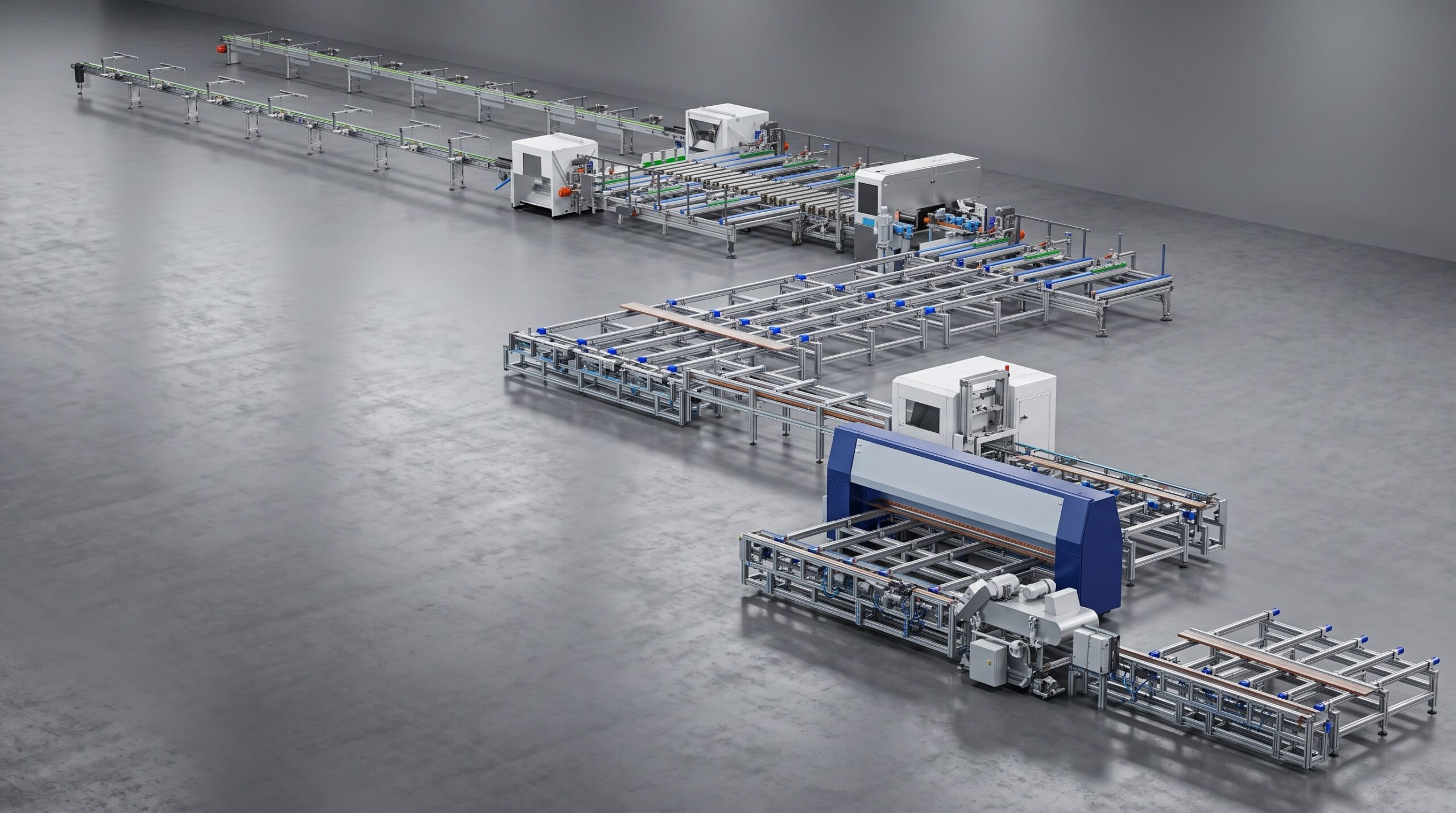
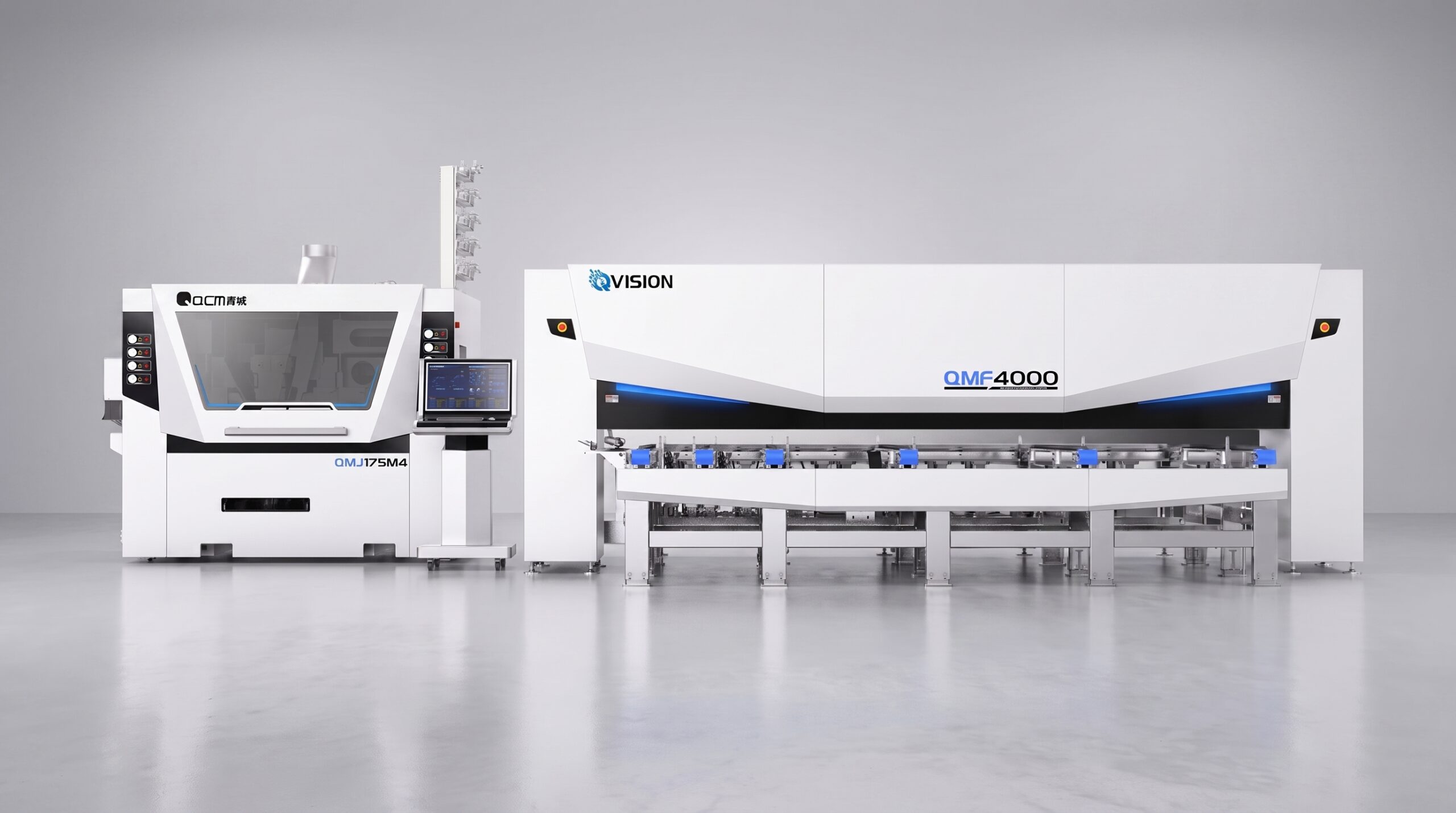
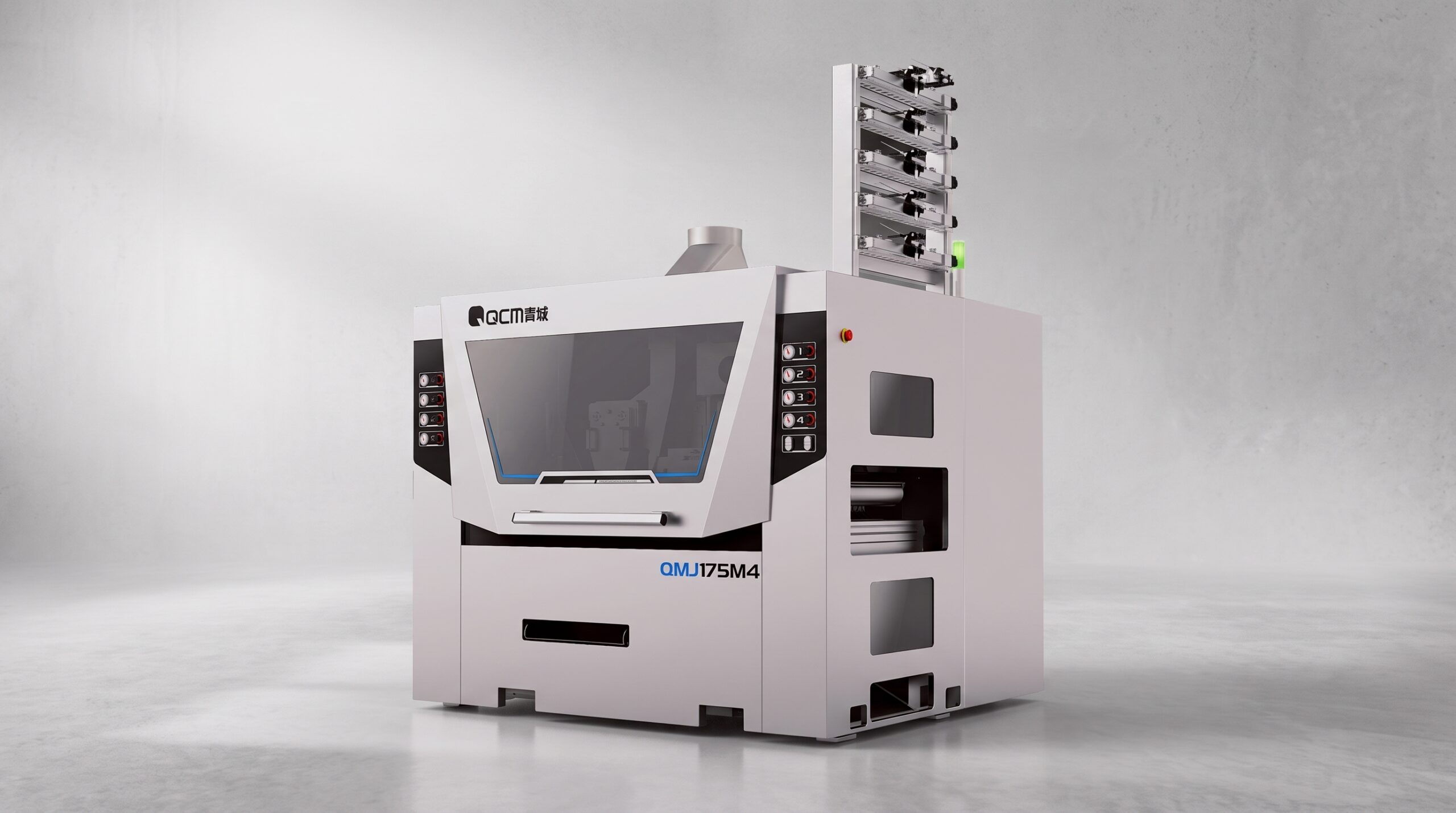
The QMJ175M4 AI Longitudinal Optimizing Saw Line is designed for intelligent longitudinal ripping and width optimization of solid wood boards. It combines visual scanning, real-time cutting optimization, servo positioning, automatic longitudinal feeding and multi-blade sawing in one integrated production system.
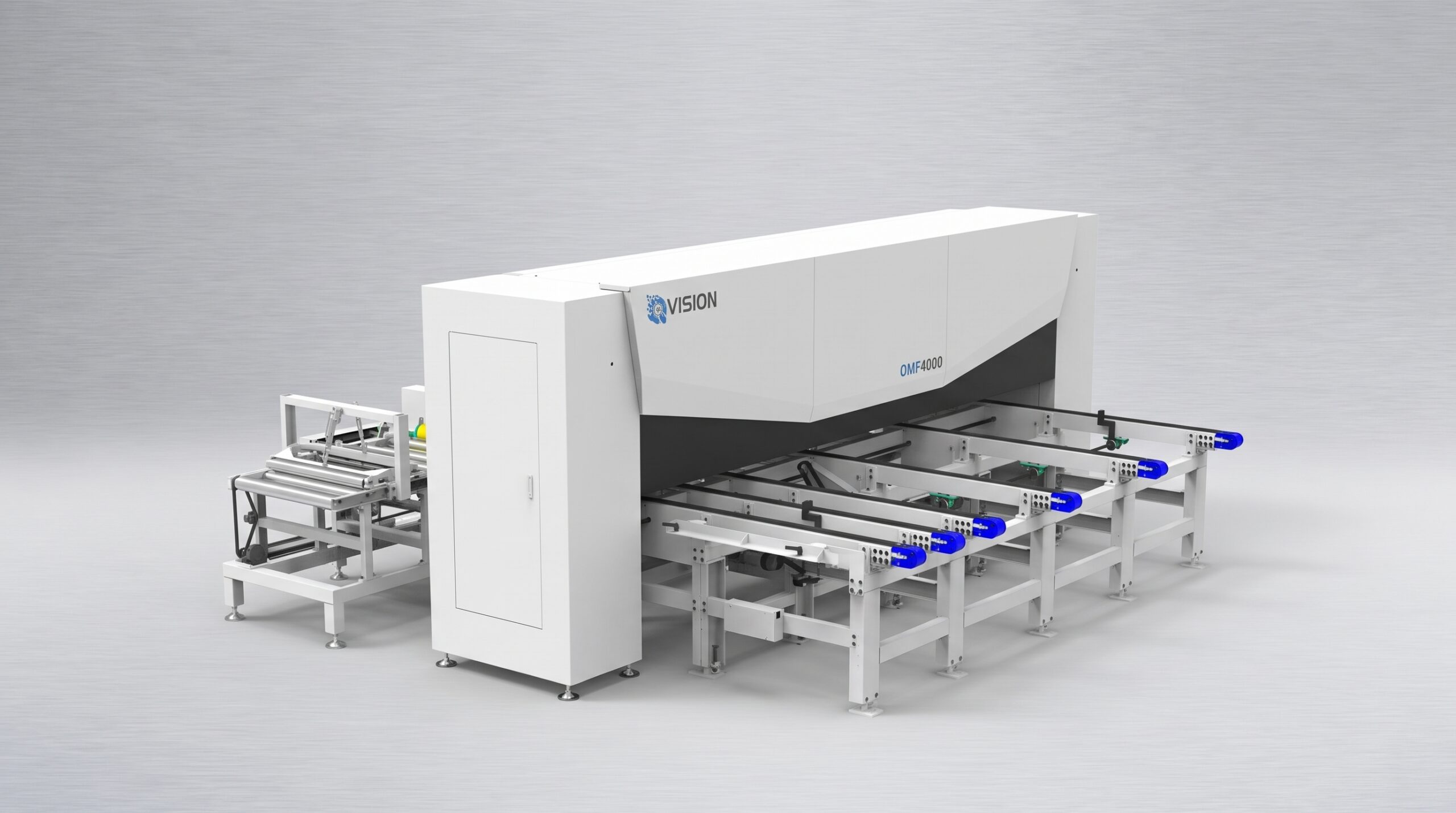
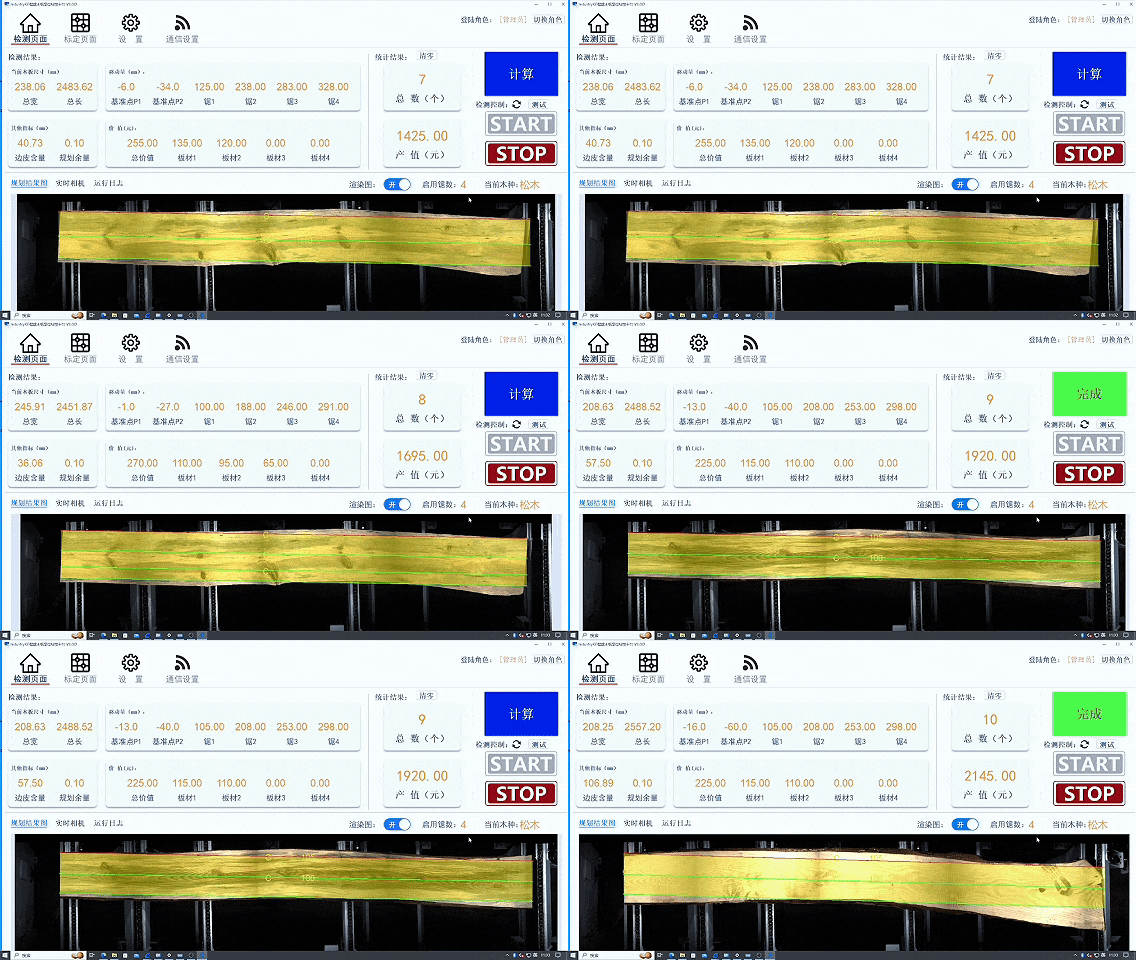
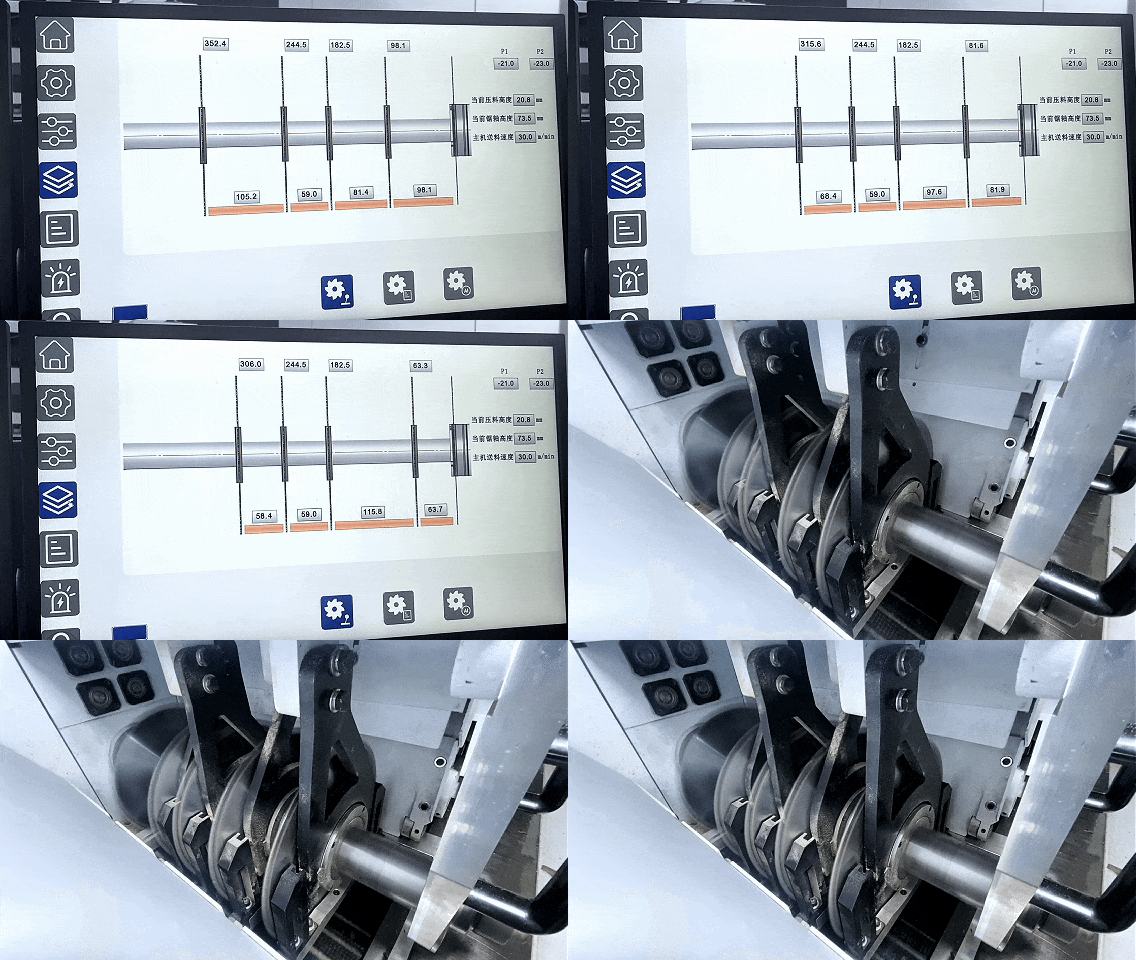
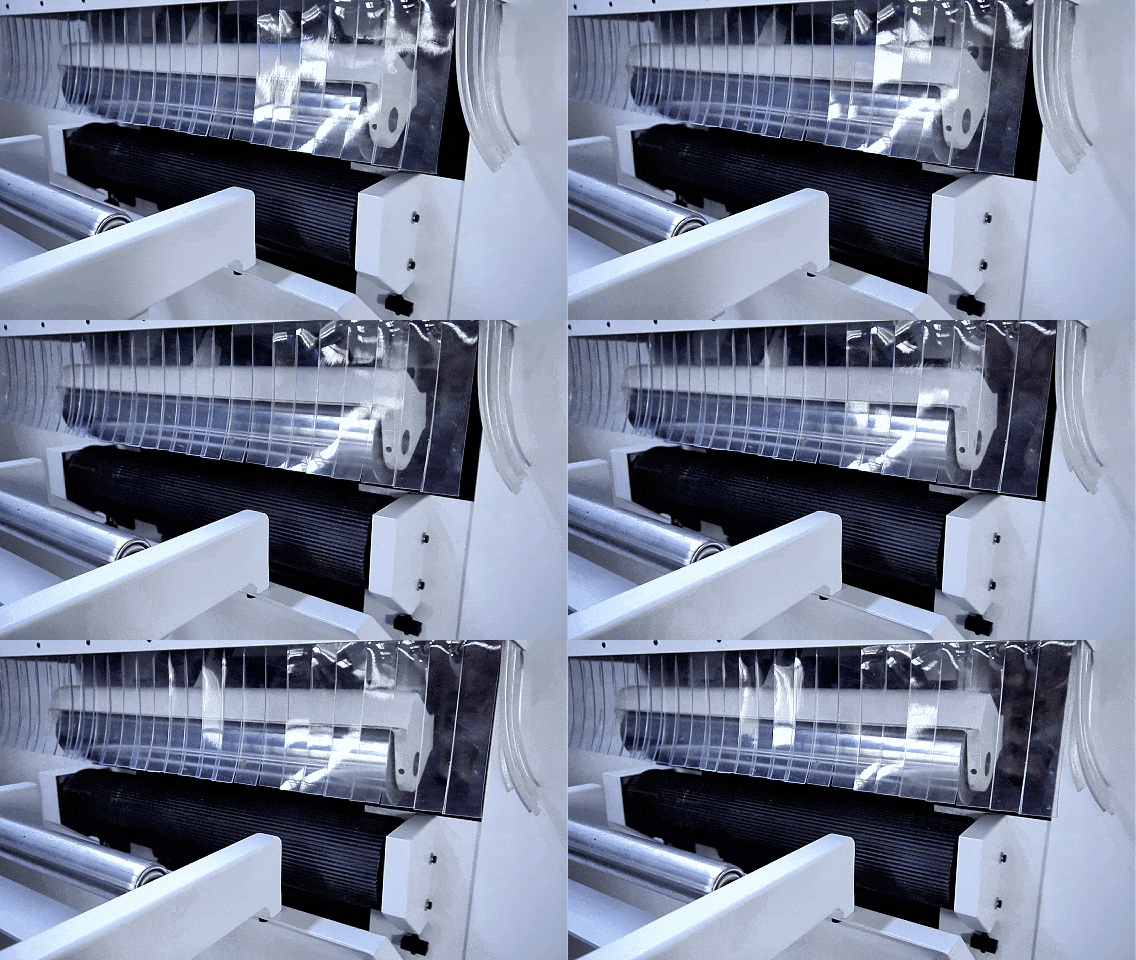
The visual scanning system measures board dimensions and identifies knots, cracks, color variations, edge defects and usable material areas. Optimization software then calculates the most efficient longitudinal cutting plan before the workpiece enters the saw. Four movable saw blades automatically adjust to the optimized cutting widths, while one fixed blade provides a stable cutting reference.
- Processing direction: Longitudinal rip cutting
- Maximum working width: 450 mm
- Maximum pass width: 800 mm
- Maximum sawing thickness: 60 mm with press plate / 80 mm without press plate
- Feeding speed: 6–60 m/min
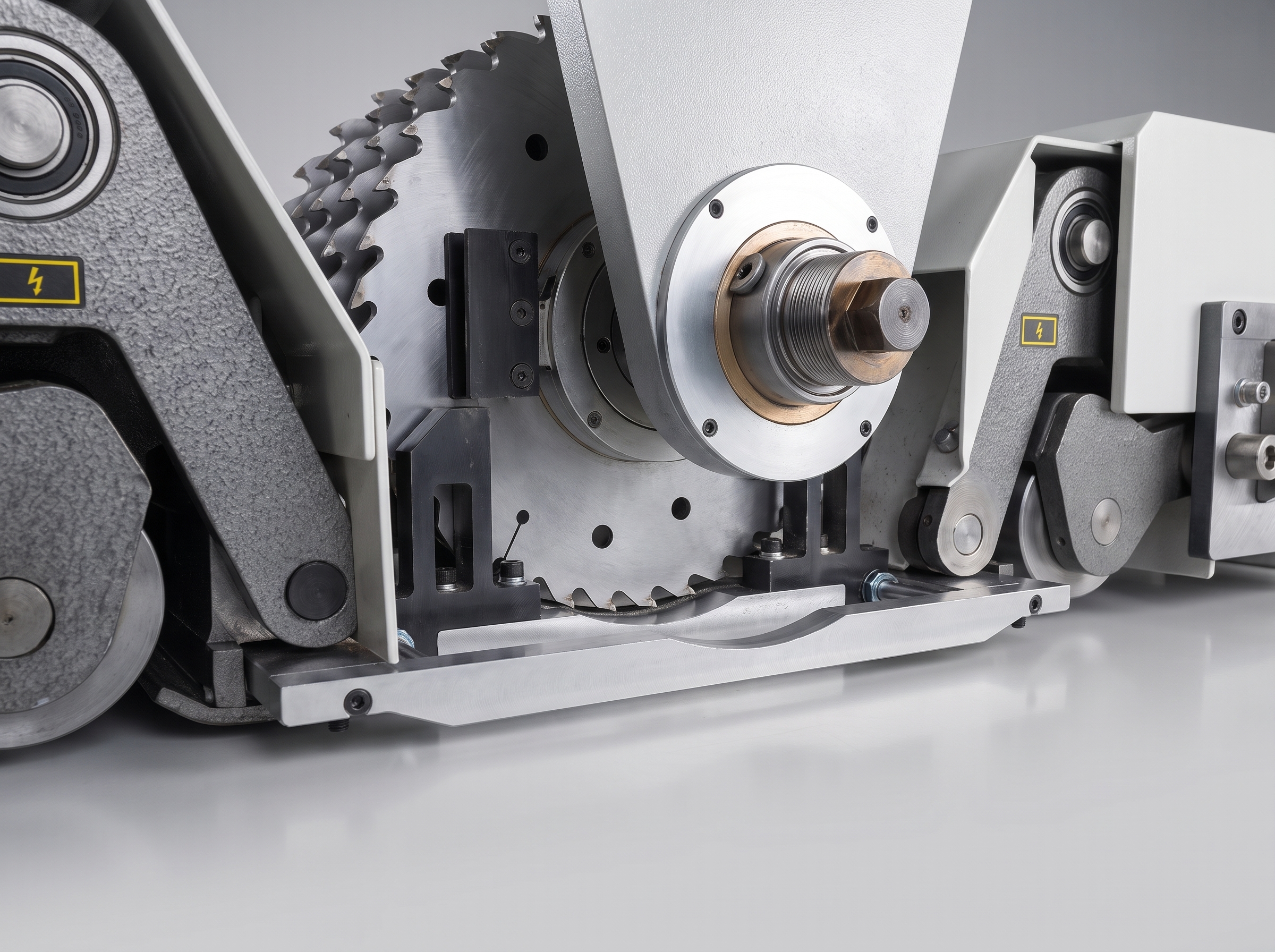
- Saw blade configuration: 4 movable blades + 1 fixed blade
- Saw shaft speed: 4,200 rpm
- Total installed power: 46.38 kW
Images
Video
Features
- The intelligent visual scanning system measures board width, length, edge-trimming position and usable material area while detecting visible defects before longitudinal cutting.
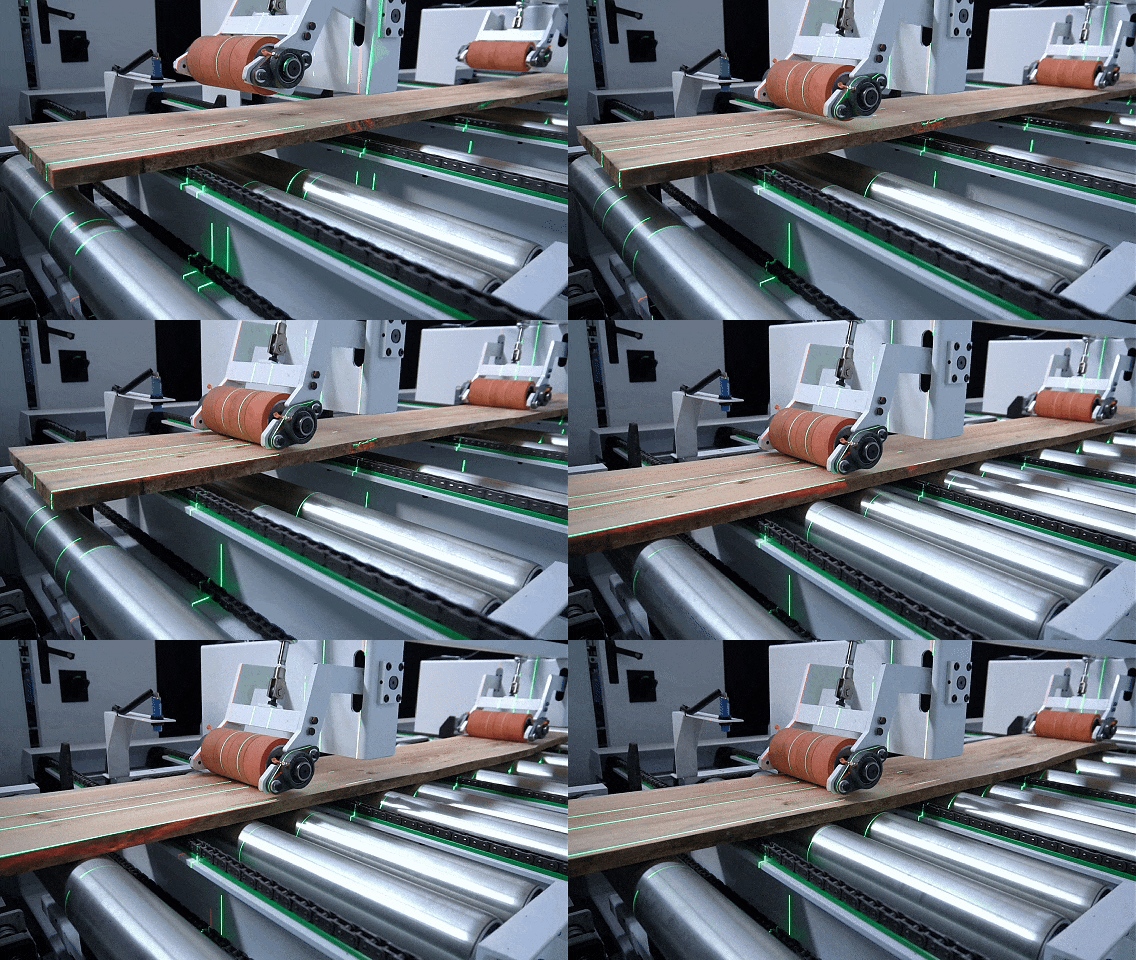
- Four movable saw blades automatically adjust according to the optimized rip-cutting plan, while one fixed saw blade provides a stable reference for consistent cutting accuracy.
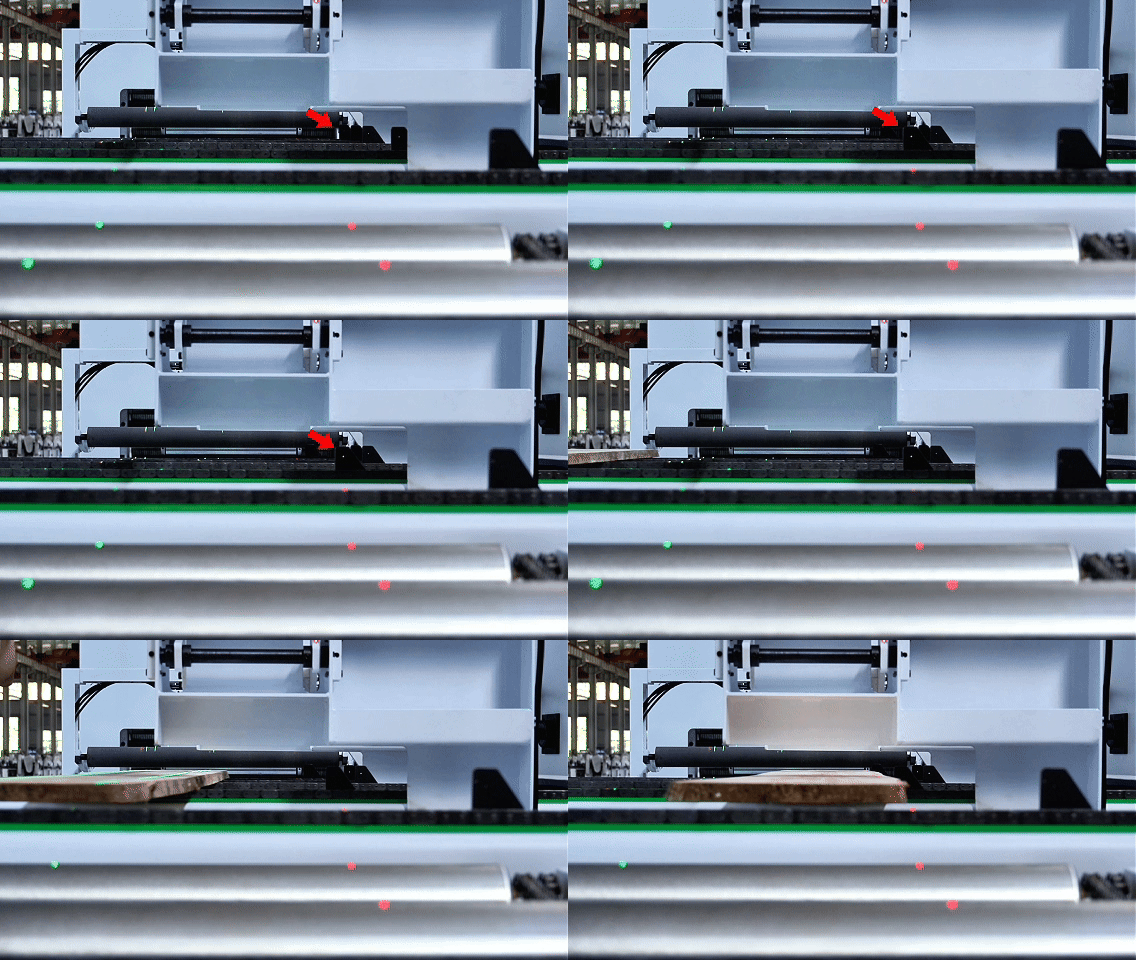
- The servo positioning mechanism automatically aligns each board with the selected cutting pattern before feeding it into the multi-blade saw.
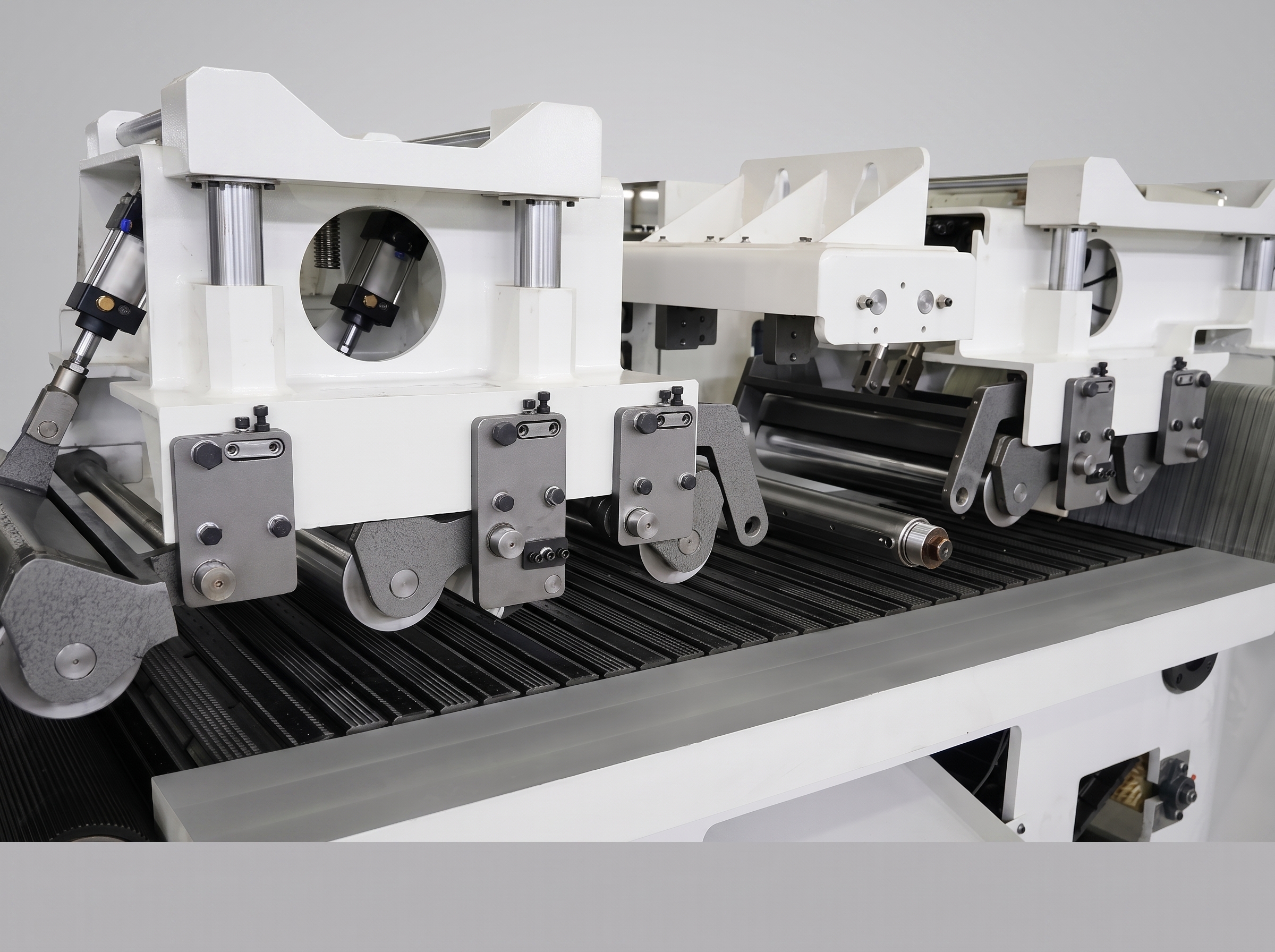
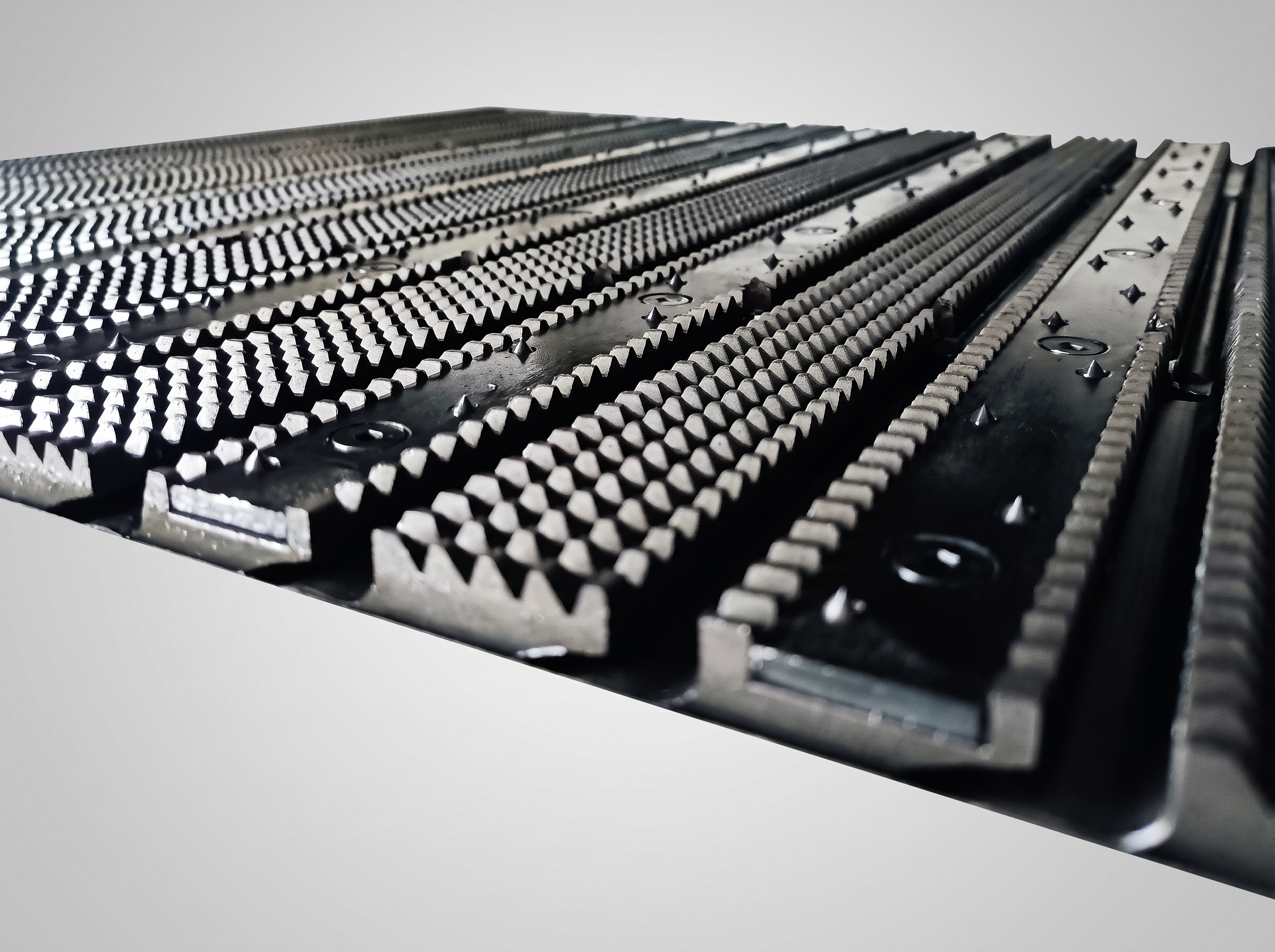
- Six air-floating pressure rollers, a follow-up pressure plate and a spiked feeding chain keep materials stable and reduce slipping, shifting and edge tearing during high-speed processing.
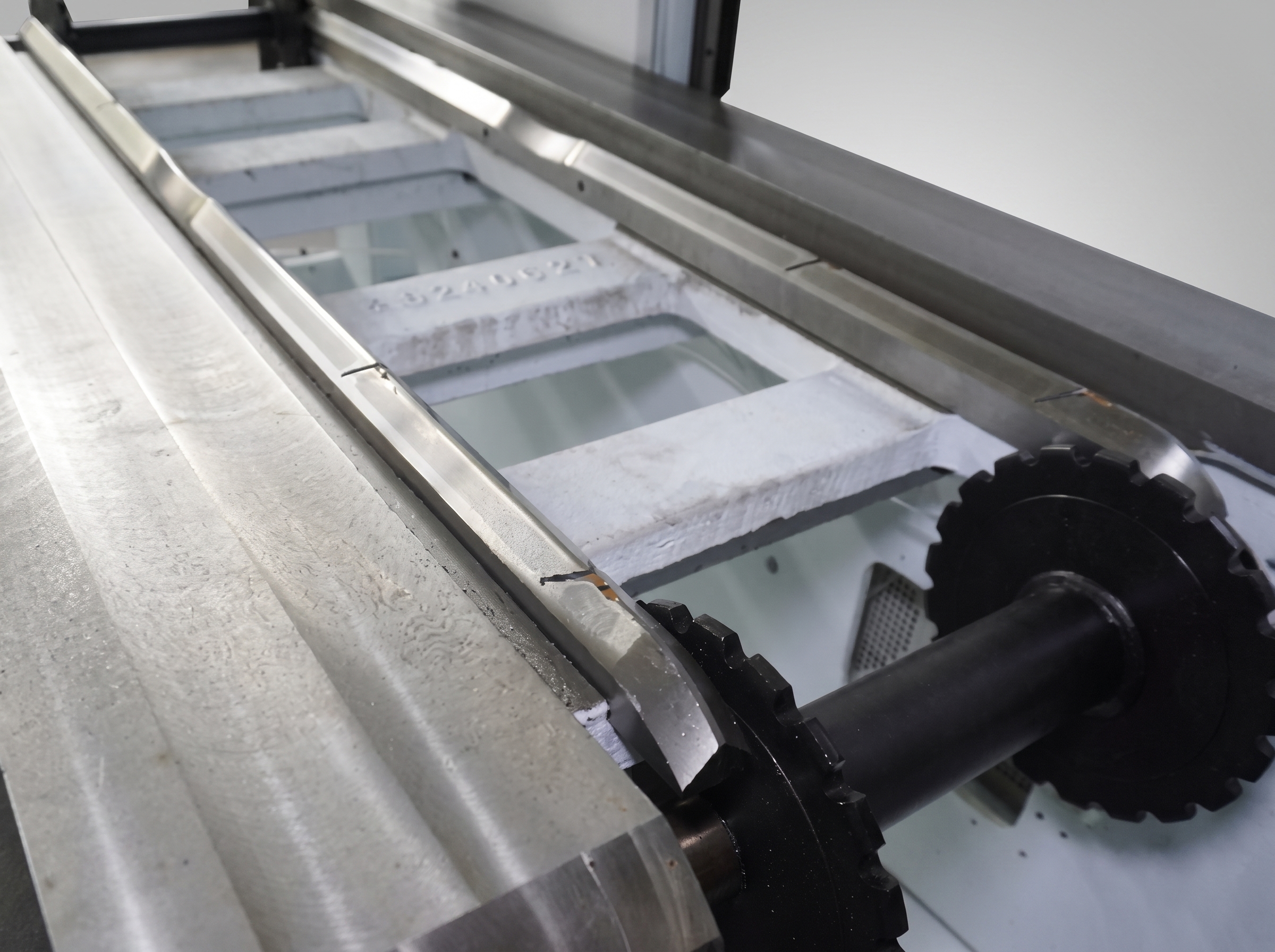
- Double diamond-shaped guide rails provide stable support and accurate longitudinal feeding, while optional infeed and discharge systems allow integration into a complete automated production line.
Technical Data
| Specifications | Unit | QMJ175M4 + QMF4000 |
|---|---|---|
| Maximum working width | mm | 450 |
| Minimum working width | mm | 45 |
| Maximum piece passing width | mm | 800 |
| Spiked chain plate | — | Standard configuration |
| Chain plate width | mm | 500 |
| Pressing plate | — | — |
| Maximum saw blade diameter | mm | Ø305 |
| Maximum working thickness with pressing plate | mm | 60 |
| Maximum working thickness without pressing plate | mm | 80 |
| Saw spindle speed | rpm | 4,200 |
| Minimum working thickness | mm | 10 |
| Minimum working length with pressing plate | mm | 600 |
| Adaptive pressure plate | — | Standard configuration |
| Saw spindle diameter | mm | Ø65 |
| Saw blade bore diameter | mm | Ø80 |
| Servo control system | — | Standard configuration |
| Movable blades | pcs | 4 |
| Fixed blade | pcs | 1 |
| Movable laser markers | pcs | 5 |
| Fixed laser marker | pcs | 1 |
| Feeding speed | m/min | 6–60 |
| Pressure roller quantity | pcs | 6 |
| Worktable height | mm | 870 |
| Standard voltage | — | 380 V / 50 Hz |
| Total power | kW | 46.2 |
| Suction hood diameter | mm | 1 × Ø250 |
| Required suction volume | m³/h | 5,300 |
| Required suction speed | m/s | 30 |
| Air supply pressure | MPa | 0.3–0.6 |
| Air consumption | m³/min | 0.1 |
| Overall dimensions | mm | 2,286 × 2,004 × 2,642 |
| Machine weight | kg | 5,500 |
| Optimization control system | — | Standard configuration |
| Visual feeding system | — | Optional configuration |
| Belt feeding system | — | Optional configuration |
| Discharge system | — | Optional configuration |